

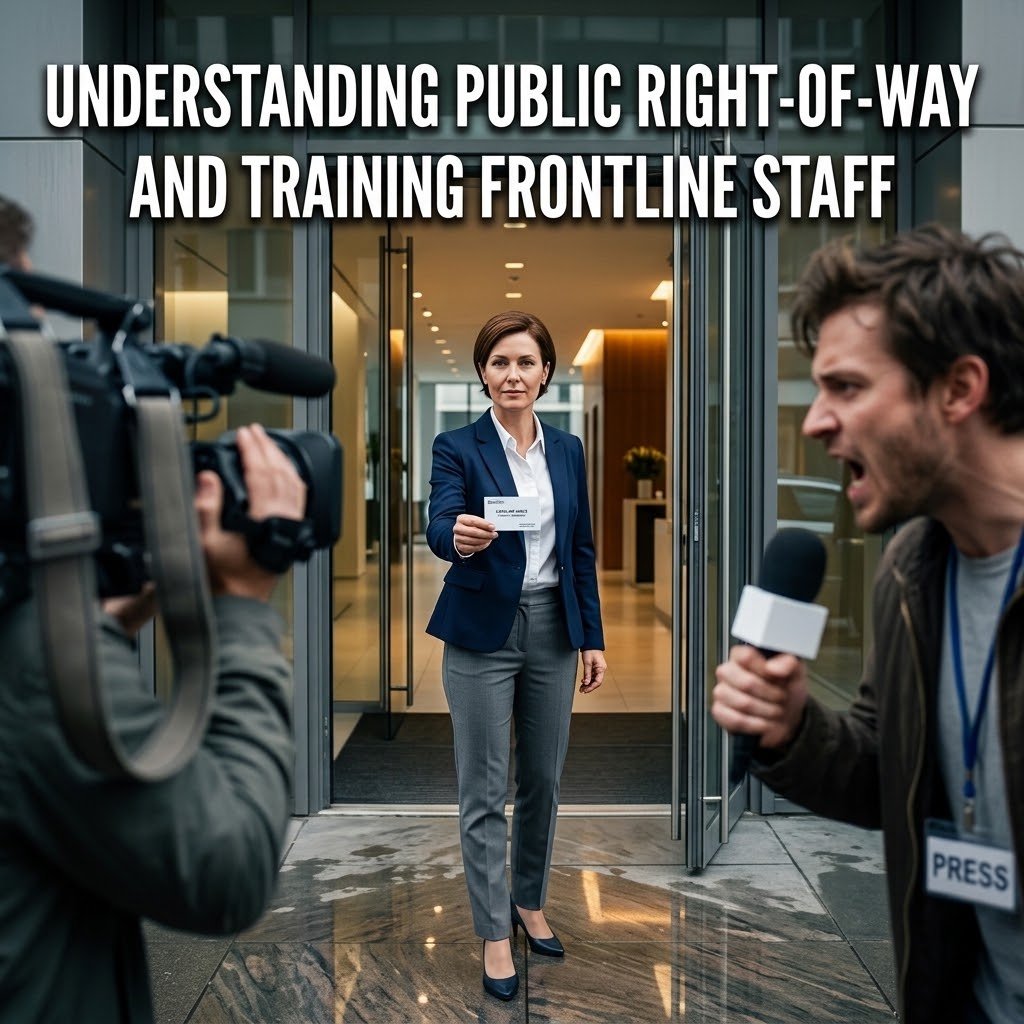
In the first three parts of our series, we explored how modern content creators bypass physical security through social engineering, delivery impersonation, and outright physical force. But what happens when the creator never crosses your front door at all?
Popularized by street-style investigators and narrative-driven creators such as viral independent podcasters and digital journalists like Nick Shirley. This tactic targets commercial facilities, private businesses, healthcare offices, and corporate regional headquarters without ever technically committing a physical trespass. Instead, the creator sets up camp precisely on the public sidewalk just outside your entrance, waiting for employees to arrive, deliveries to drop, or managers to step outside.
For operations directors, managing a sidewalk ambush requires an entirely different operational mindset. You cannot lock a public sidewalk, and you cannot call the police for simple loitering if the individual stays on public right-of-way. Success here depends on absolute baseline discipline, legal clarity, and strict frontline de-escalation protocols.
Case Study: The Sidewalk Confrontation and Narrative Framing
What Happened
In high-profile investigations targeting regional facilities and taxpayer-funded operations, creators routinely walk up to facility doors during active business hours, knock aggressively, and thrust cameras and microphones into the faces of opening employees. When staff members answer, the creator fires off rapid, loaded, and accusatory questions—often alleging fraud, negligence, or corporate malfeasance.
Because these encounters are unannounced, frontline employees are caught completely off guard. Flustered workers often slam the door, attempt to physically block the camera lens, or make defensive, unvetted statements. Creators then take these raw, high-friction reactions and edit them with dramatic music and abrupt cuts, presenting the employee’s panic or silence as definitive “proof” of guilt or corporate conspiracy.
Where Operational Defenses Failed
- The Panic Factor: Employees had never been trained on how to handle an aggressive camera thrust into their face on their own doorstep. Their instinctual fight-or-flight response generated the exact hostile footage the creator needed for their narrative.
- Blurring the Legal Boundary: Staff mistakenly tried to order the creator off the public sidewalk, shouting “You can’t film here!” This instantly handed the creator a secondary narrative: the “tyrannical business trying to suppress free speech.”
- Absence of a Designated Routing Protocol: With no media routing card or standard communication policy in place, frontline workers attempted to ad-lib answers on the spot, creating massive PR exposure for the organization.
The Legal Boundary: Public Sidewalk vs. Private Threshold
The single most critical operational concept for facility directors to teach their teams is the rigid legal boundary defining where public rights-of-way end and private property begins.
- Public Property (The Sidewalk): In most jurisdictions, public sidewalks, streets, and municipal verges are protected public forums. Independent creators, journalists, and vloggers have a legal right to stand on public concrete and record anything visible from that vantage point. Telling them to “stop filming from the street” legally undermines your credibility and fuels their content.
- The Private Threshold (The Doorway & Beyond): The exact moment an individual crosses your property line, steps onto your private patio, or pushes past your doorway without authorization, the legal landscape changes entirely. You maintain the right to enforce private property rules, prohibit uninvited commercial filming, and issue an immediate verbal trespass warning.
What’s at Stake? Reputation, Employee Safety, and Public Trust
A mishandled sidewalk ambush creates cascading liabilities for a business:
- The Edited Narrative Trap: Heavy video editing can turn an innocent request for privacy into an indictment of corporate guilt. Even if your facility is entirely compliant, a viral video showing a panicked manager slamming a door can damage brand equity overnight.
- Employee Psychological Safety: Frontline workers—receptionists, administrative staff, and site technicians—should never have to act as corporate spokespersons under hostile camera fire. Subjecting them to unvetted ambushes causes severe workplace anxiety and high staff turnover.
- External Regulatory Scrutiny: Viral videos targeting facilities often trigger secondary waves of digital harassment, bad-faith online reviews, and preemptive pressure on local regulators or law enforcement.
How Can Businesses Manage Viral Investigators Conducting Ambush Media
Defending against property-line and sidewalk ambushes requires turning your frontline staff from reactive targets into disciplined, process-driven operators.
1. Implement the “Never Speak, Always Route” Rule
- Absolute Silence on Camera: Establish a strict, zero-exception employee handbook rule: No frontline employee is ever permitted to give an on-the-record statement, answer investigative questions, or defend company operations on camera.
- The Media Routing Card: Equip every receptionist and front-desk station with laminated business cards containing a single point of contact: your corporate communications director or PR legal counsel.
2. The De-escalation & Hand-Off Script
Train staff to respond to ambush cameras using a calm, unshakeable, robotic script that completely deprives the creator of emotional friction:
“I am not authorized to speak on behalf of the company. Please direct all inquiries and questions in writing to our corporate media relations team at the email address on this card. Thank you, have a good day.”
Staff must hand the card over, step back, close and lock the secure door, and walk away immediately. Do not argue, do not cover the lens, and do not lose your temper.
3. Hardening the Doorstep Threshold
- Keep Entrance Doors Locked: For vulnerable operational sites (childcare facilities, private clinics, secure corporate offices), keep exterior doors locked during operational hours, requiring an active badge tap, intercom verification, or receptionist release to enter. This prevents an ambush creator from casually stepping inside your private threshold while asking questions.
- Clear Property-Line Signage: Post prominent, professional signage at your property boundary line stating: “Private Property. Unauthorized Commercial Filming Prohibited Beyond This Point.” While it won’t stop someone from filming from the public sidewalk, it legally establishes your boundary the moment they step foot onto your property.