

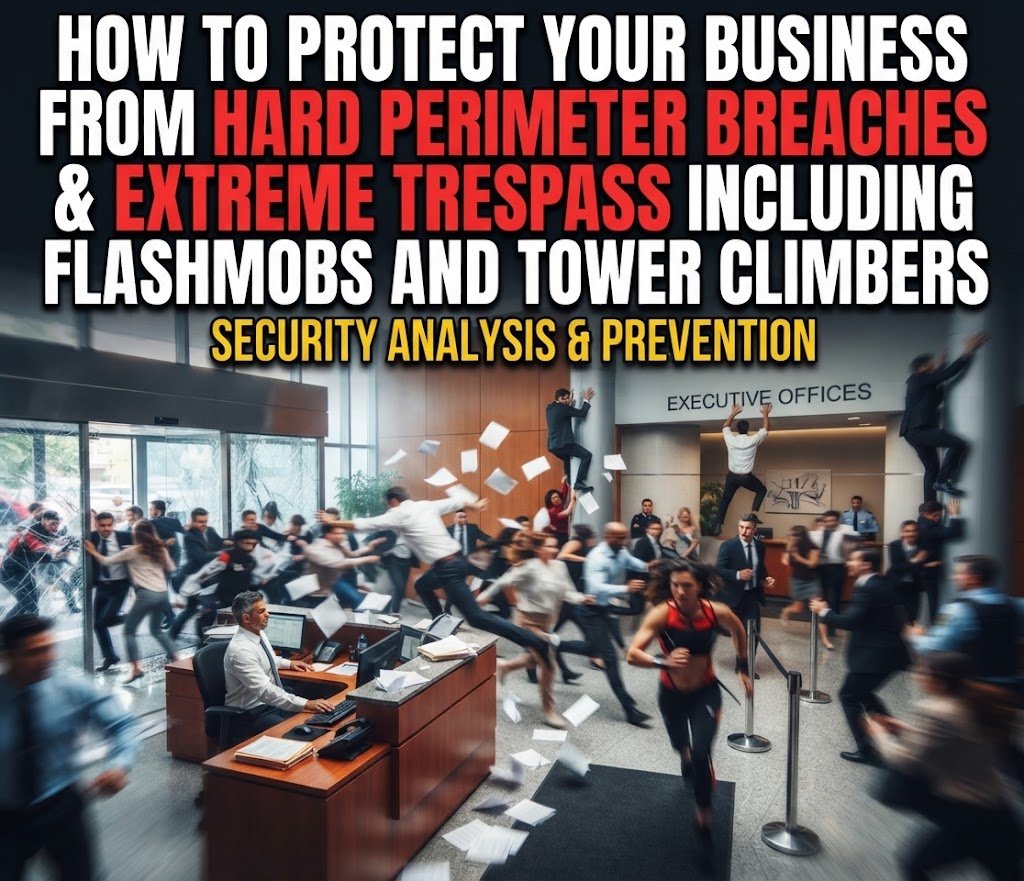
In the first two parts of our series, we examined how modern content creators trespass front-desk security through social engineering and delivery disguises. But what happens when the veneer of deception is dropped entirely, replaced by brute force, numerical overwhelm, or extreme vertical stealth?
Over the past year, commercial facility management has faced a dramatic surge in two distinct high-impact threat models: the viral “speedrun” flash-mob incursion targeting ground-level entries, and elite high-rise “rooftopping” targeting structural spires thousands of feet in the air.
For operations directors, these incidents are coordinated security failures that trigger felony arrests, massive liability, and multi-agency emergency responses. Examining how these breaches happen and how staff must respond reveals vital lessons for hardening your property against the ultimate physical challenges.
Case Study: Two Extremes of Modern Infiltration
Scenario A: The Scientology “Speedrun” Flash-Trespass
- What Happened: Sparked by viral social media challenges, groups of individuals (sometimes numbering in the dozens) target facilities such as regional Church of Scientology properties. Mimicking video game “speedruns,” where participants trespass and rush through public-facing entry doors, attempting to force their way deep into private administrative zones while filming. In major incidents across cities like Los Angeles and Seattle, these incursions escalated past mere running: intruders forced doors open with crowbars, clashed with staff members, and caused property damage, resulting in swift multi-jurisdictional police responses and felony burglary charges.
- The Operational Failure: Facilities relied on traditional, welcoming entry points designed for parishioners and public visitors. When hit by a sudden, coordinated human wave, open-door thresholds and standard manual locks failed to hold back the volume.
Scenario B: The “Skywalker” High-Rise Trespass Spire Ascent
- What Happened: World-renowned urban climbing duo Angela Nikolau and Ivan Beerkus (featured in the documentary Skywalkers) executed a high-stakes infiltration of New York City’s iconic Empire State Building. Rather than scaling the exterior wall in broad daylight, the duo utilized advanced preparation: investigators determined they hid inside the commercial complex the night before, bypassed an upper-floor security door with a broken lock, and ascended thousands of feet to the broadcast spire to stage a marriage proposal before being intercepted by specialized NYPD units and drones upon descent.
- The Operational Failure: A blind spot in overnight environmental security and interior stairwell access controls. The threat didn’t come from outside the perimeter wall; it originated from within the building’s lingering public-to-private transition zones after hours.
How Staff Responded—and Where the Legal Boundaries Lie
When a facility is hit by a flash-mob or an extreme urban climber, frontline staff and security teams face immediate, high-pressure choices. Understanding what they did and what they are legally permitted to do is critical for operational risk management.
1. Did Staff Use Force? Can They Detain?
In both scenarios, private security guards exercised extreme restraint, avoiding offensive physical force.
- The Scientology Incursions: Staff primarily used defensive physical positioning from slamming doors shut, pushing back against surging crowds, and locking thresholds to protect administrative personnel.
- The High-Altitude Climbers: On-site security personnel took zero physical action at altitude. At thousands of feet on a building spire, attempting to physically tackle a climber would result in catastrophic, fatal liabilities for both parties.
The Legal Reality: Private security guards are not police officers. While some jurisdictions recognize “citizen’s detention” or property protection privileges during active felonies (such as burglary or malicious destruction), physically subduing a viral creator opens the facility to massive civil liability for assault, battery, or false imprisonment. In almost all high-intensity trespass cases, the golden rule remains: protect the threshold, evacuate or secure vulnerable staff, and let law enforcement handle the apprehension.
When preparing a trespasser confrontation plan, it is important to consult legal team to know what are your legal rights and tools at your disposal as the wrong action could result in legal damages.
What’s at Stake? The True Cost of Perimeter Failure
When facilities fail to secure their hard perimeters against modern stunt culture, the fallout stretches far beyond a messy YouTube video. Risks could include
- Catastrophic Life Safety Hazards: Unmonitored urban climbers risking a 1,400-foot fall create immediate fatal liabilities for property owners. Furthermore, scaling broadcast spires requires emergency teams to shut down live high-frequency radio and television antennae to prevent radiation exposure to the trespassers.
- Trespasser Injuries Resulting In Lawsuits – Depending on jurisdiction, staff response resulting in injuries on the trespasser could result in lawsuits against the facility.
- Criminal Liability and Civil Exposure: Breaches involving forced entry, property destruction, or weaponized threats (such as crowbars used against staff) transform a simple prank into felony-level burglary and criminal mischief.
- Severe Operational Paralysis: Responding to flash-mobs or structural infiltrations consumes hundreds of hours of executive, legal, and security bandwidth, diverting resources away from core commercial operations.
How Can Facility Operations Prepare Against Hard Breaches
Defending your commercial property against aggressive flash-incursions and stealth infiltrators requires moving past basic locks and keys. Operations directors must implement a multi-layered hardening strategy.
1. Dynamic Threshold Hardening (For Flash-Mobs)
- Remote-Triggered Magnetic Locks: Equip high-risk primary entrance doors with heavy-duty magnetic locks tied directly to the security control desk. If a crowd surges or security identifies a suspicious gathering, guards must be able to instantly lock exterior entry points from a safe distance.
- Eliminate Exterior Grab Points: For vulnerable urban-facing properties, remove exterior door handles from secondary public-facing doors, replacing them with push-plates that only allow one-way exit, turning potential entry points into dead ends.
2. Internal Sweep & Overnight Access Control (For Stealth Infiltrators)
- Strict “After-Hours” Zoning: High-rise and multi-tenant commercial buildings must enforce strict electronic badge zoning. If an individual enters the building as a legitimate visitor during business hours, their access must automatically expire or restrict once commercial hours end.
- Stairwell and Roof Hatch Hardening: Equip all emergency roof hatches and internal mechanical stairwell doors with dual-stage sensors or silent door-contact switches that alert the command center instantly if a door is propped, forced, or unlocked, paired with local strobe lights to disorient intruders.
3. Automated Law Enforcement Integration
- Treat Mobs as Active Burglaries: Train monitoring teams to classify coordinated physical breaches not as “trespass nuisances,” but as active forced-entry events. Direct-dial emergency protocols must communicate immediate threats (such as weapons or forced door breakage) to municipal police to ensure priority tactical dispatch.
By treating your physical facility boundaries with the same rigor cybersecurity professionals apply to digital firewalls, you ensure that your building remains a place of business and not a viral playground for trespassing clout-chasers.