

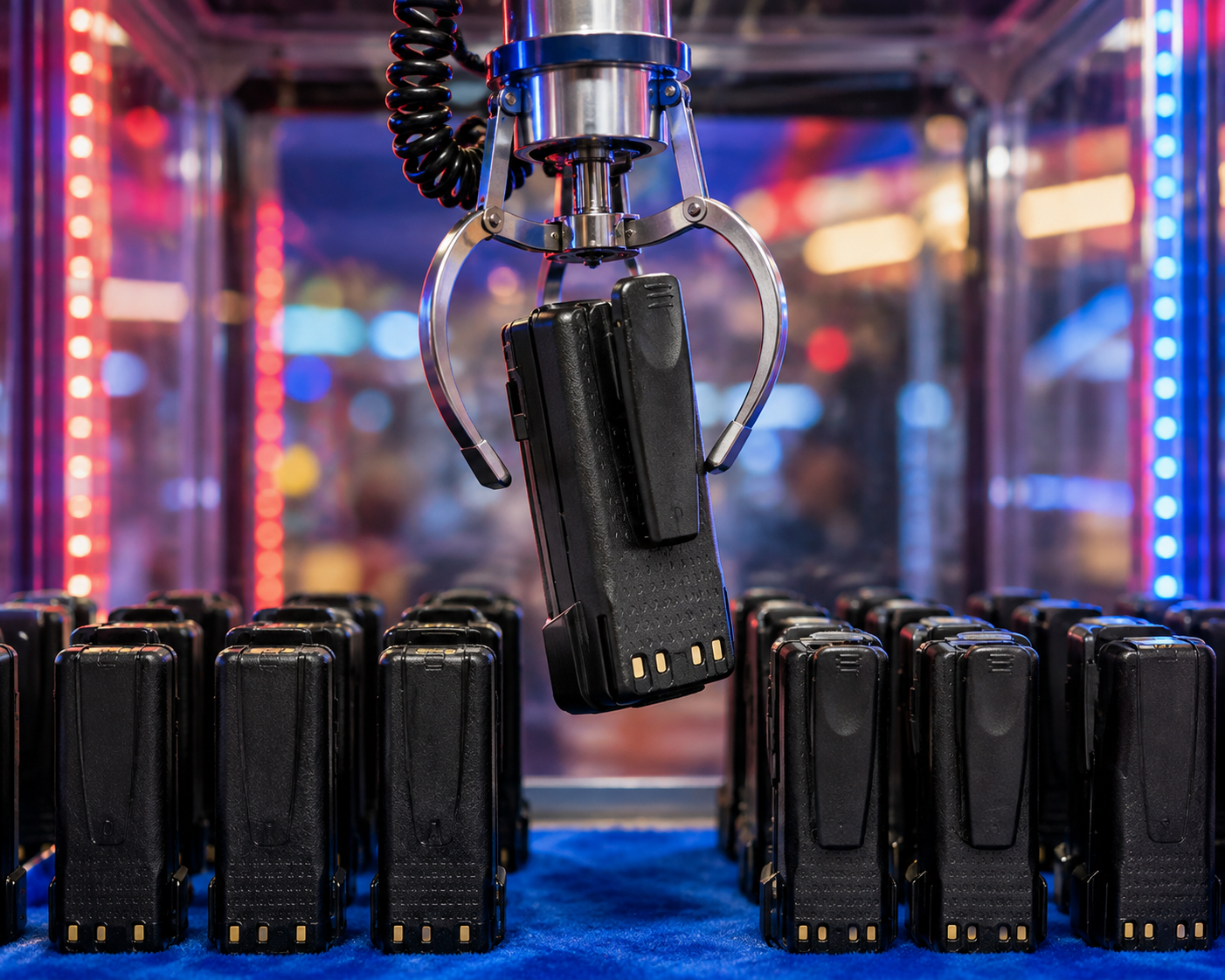
When facility operations and security teams face tighter budgets, the temptation to slash operational costs by swapping original equipment manufacturer (OEM) two-way radio batteries for cheaper alternatives is high. Two-way radios serve as an essential, always-on communications backbone across campuses, but powering that fleet is a recurring expense. Yet, moving away from OEM packs introduces hidden liability and severe physical safety risks that far outweigh upfront savings—chief among them being the threat of a charging bench fire.
To understand why third-party packs carry this risk, you have to look inside the casing. A two-way radio battery is not just a plastic brick filled with chemical energy; it is a complex electro-chemical system governed by micro-electronics. OEMs engineer their packs with stringent tolerances, proprietary shell designs, and deeply integrated handshakes with charging infrastructure. When facilities teams procure unverified, white-label third-party replacements to cut corners, they often introduce components lacking basic safety engineering.
The core danger on any charging bench stems from thermal runaway—an unstoppable cascading reaction where a failing cell generates heat, which raises the temperature further until the cell ruptures, vents toxic gas, or catches fire. Preventing this requires robust safety engineering inside the battery casing, specifically multi-tiered protection circuits and certified cell chemistry.
Without proper safeguards, a battery left on a multi-unit charger overnight can easily experience over-current or over-voltage anomalies. This is why safety compliance cannot be an afterthought. If your team explores third-party options for your broader facility ops protocols, you must mandate strict verification standards. At a minimum, any aftermarket pack must feature verified UL 2054 or IEC/UL 62133 certifications.
UL 2054 evaluates complete commercial and household battery packs through abusive electrical, mechanical, and environmental testing—including intentional short-circuiting and overcharge abuse—to ensure the unit will not catch fire or explode even if a primary component fails. Similarly, UL 62133-2 addresses portable secondary lithium cells and packs to guarantee structural and thermal stability.
Equally vital is the internal Battery Management System (BMS) quality. A high-grade BMS acts as the brain of the battery, containing integrated circuits designed to execute critical safety cutoffs:
- Over-current protection: Shuts down the circuit if current draw spikes dangerously.
- Over-voltage protection: Prevents cell degradation and gas buildup during aggressive charging cycles.
- Thermal cutoffs: Physically or electronically breaks the circuit if internal pack temperatures cross safety thresholds.
Cheap aftermarket alternatives frequently omit secondary hardware protection fuses, utilize subpar MOSFETs, or skip proper cell matching. When these cheap packs sit in smart charging docks, the mismatched charging profiles can confuse the charger, bypassing safety checks and cooking the internal cells.
If your organization decides to evaluate third-party options, you must carefully audit the supplier’s spec sheet. Real safety compliance requires verifiable documentation, traceable lab reports from Nationally Recognized Testing Laboratories (NRTL), and transparent data regarding cell origin (such as tier-1 manufacturer cells). Beware of vague phrasing like “built to UL standards” or unverified logos stamped onto plastic housings—these are classic red flags for uncertified imports that substitute cheap components to lower prices.
While OEMs remain the gold standard for guaranteed hardware synchronization and risk mitigation, operations directors navigating strict budgets can learn how to systematically vet alternative vendors by following a pragmatic procurement framework. To explore safe sourcing strategies and protect your hardware investments, review the full guide on vetting aftermarket vendors within our Facility Ops category. Ensuring safety on the charging bench starts with refusing to compromise on compliance, protecting both your infrastructure and your frontline staff.